Margaret River’s Rise to Greatness, by Erin Larkin

Margaret River’s Rise to Greatness
by Erin Larkin
Robert Parker Wine Advocate
Margaret River is the traditional land of the First Nations Wadandi people. Wadandi means “saltwater people,” and the connection to the coast and the sea is the essence of Margaret River, today.
Margaret River is a very young wine region by world standards. While white settlement occurred in the 1830s, the first vines of the modern commercial era were not planted until 1967 at Vasse Felix—although there were vineyards in the ground prior to 1967, albeit on a smaller scale. The early families at that time—the Cullitys (Vasse Felix), the Cullens (Cullen Wines, planted in 1971), the Junipers (Juniper Estate, planted in 1973), the Horgans (Leeuwin Estate, planted in 1976), the Watsons (Woodlands, planted in 1973) and the Pannells (Moss Wood, planted in 1969) were, in a wine sense, little more than educated cognoscente with opportunity and means. Their prescience, courage and diligent endeavor in that southern coastal wilderness built the foundations of one of the great wine regions of the world.
Today, Margaret River is a boutique region, producing only 2% of Australia’s total crush (at an average of 36,000 tons per annum). More than half of the producers in the region crush less than 50 tons on average per annum—for perspective, less than 1% of producers in Australia crush under 100 tons—and many of the cuvées tasted for this report were made in single- or double-barrel quantities.
Clones
Both Chardonnay and Cabernet Sauvignon plantings are predominated by a few key clones, although there is increasing diversity in the ground in the pursuit of future surety of yields and quality.
Chardonnay
The Gingin clone is undoubtedly the hero clone of the region. The first cuttings of this clone arrived in 1957; Dr. Harold Olmo from the University of California sent 24 canes of “Pinot Chardonnay” from UC Davis to the Department of Agriculture in Western Australia two years after his first visit in 1955. The canes were planted in Gingin at the Swan Research Station, approximately 78 kilometers or 49 miles north/northeast of Perth city. The original source block, or foundation vineyard in California, was planted at UC Davis at the end of the prohibition era, circa 90 years ago.
The 1950s and 1960s mark a dynamic and pivotal time in Western Australian viticulture. Dr. Harold Olmo and respected agronomist Dr. John Gladstones met during Olmo’s residency at UWA in 1955. The knowledge, energy and exhaustive research of these two men helped to shape the beginning of the wine industry in Western Australia.
The Gingin clone (proven to be distinct from Mendoza) is endemic to Margaret River and is typified by its tiny bunches—similar to a small cob of corn or a hand grenade in size and shape. It has notoriously poor fruit set and is therefore low yielding, with bunches sometimes weighing in at as low as 65to 70 grams. The vines also “suffer” from millanderage; the berries are hen and chicken sizes and ripen at different rates. Due to the very high acidity, pronounced phenolic structure and powerful fruit characters, the resultant wines are long lived, expansive and expressive—emphasized and encouraged by shrewd viticulture and winemaking. Producers such as Cullen, Leeuwin, Vasse Felix, Pierro, Xanadu, Stella Bella, Walsh & Sons, Fraser Gallop, Domaine Naturaliste and McHenry Hohnen—to name a few—all employ the Gingin clone in their top wines.
There are Dijon/Bernard clones in the region, mainly 95, 96, 277 and 76, which produce very different fruit profiles and acid drives to Gingin. There are very few top-tier wines made using exclusively these clones, however there are several producers that blend these in with the Gingin component. As the Dijon/Bernard clones express inversely, they are often treated differently in the winery (widespread malolactic fermentation, for a start), which only exacerbates their blending attributes. Several producers who work with these clones include Voyager Estate, Windows Estate, Domaine Naturaliste (Purus) and Larry Cherubino, in either some or all their top cuvées.
There is one sparkling producer featured in this report that works with an array of Chardonnay clones for their purposes—Clones 1 (I10V1), 5 (G9V7), 7 (G9V7 H90.1) as a part of those aforementioned, sans Gingin—and that “Blanc de Blanc” perspective is an interesting and valid inclusion in this report. Each of these clones brings with it specific attributes that favor sparkling wine production over table wine; I tasted through a collection of clonally isolated base wines for the purpose of this report—the distinctions between which were vivid.
The 2022 crush statistics for Chardonnay are thought-provoking in that they reveal that Chardonnay is not the most ubiquitous grape in the region, although it is the most expensive, pipping Cabernet Sauvignon at the post at circa $2,000 per ton (average national price is circa $500 a ton). Semillon is the highest percentage of crush at 34.08% of the total in 2022, followed by Sauvignon Blanc at 33.74% of the total—clearly blending partners. Chardonnay is a way down at 24.79% of the total (3,830 tons), followed by Chenin Blanc at just 5.48% of the total.
Chardonnay Winemaking Style
When we consider Chardonnay, the “handpicked, whole-bunch pressed, wild ferment on high solids in barrel, matured for 10 months in French oak” commentary was repeated many times. Very few producers are experimenting with extended time on skins in the pursuit of skin-contact white wines or extended time in oak—i.e., beyond 10-14 months—and press methods were not widely discussed with me. Several producers are working with amphora and concrete, and I found these wines to be wholly exciting when paired with the high-quality fruit that went into them. The phenolics interact well with these materials and imbue the wines with an unforced, mineral, effortless feel. The adherence to wild ferment (for many but not all the producers) has yielded wines of greater complexity and balance, although it does not preclude those who choose to inoculate, and the resistance to early sulfuring in barrel has only added to the complexity of the best. Malolactic fermentation remains a divisive tool for the Gingin clone Chardonnay producers. I find this interesting and suspect that it may morph over time. In conjunction, bâtonnage is another contrivance employed to greater and lesser effect. Picking windows as a philosophy was the other area of great significance here. The difference in days to the final wine is stark, and some who choose to pick on the “al dente” side of ripe are responsible for wines with piercing intensity of acidity. Equally, wines picked later grow exponentially in volume and breadth—although the acidity feels immovable.
Stylistically across the country, the Australian Chardonnay pendulum has swung away from the hideously obese wines of the excessive 1980s period, to anemic, acid-driven, early-picked wines of the early to mid 2000s, back to the powerful, high solids, wild, complex wines we see today. Many producers in Margaret River have remained fundamentally immune to the bloating and contracting of trends over the years, and this has held them in good stead. The direction now seems to be sitting comfortably at around 13% to 13.5% alcohol, not due to chasing this outcome but as a result of growing and picking the fruit in order to most eloquently express site. As a group, the Chardonnay wines were more adventurous than the Cabernets, and it was a pleasure to witness many producers experimenting with different styles and methods while still deftly retaining a sense of place and terroir in the wines.
Stylistically across the country, the Australian Chardonnay pendulum has swung away from the hideously obese wines of the excessive 1980s period, to anemic, acid-driven, early-picked wines of the early to mid 2000s, back to the powerful, high solids, wild, complex wines we see today. Many producers in Margaret River have remained fundamentally immune to the bloating and contracting of trends over the years, and this has held them in good stead. The direction now seems to be sitting comfortably at around 13% to 13.5% alcohol, not due to chasing this outcome but as a result of growing and picking the fruit in order to most eloquently express site. As a group, the Chardonnay wines were more adventurous than the Cabernets, and it was a pleasure to witness many producers experimenting with different styles and methods while still deftly retaining a sense of place and terroir in the wines.
I have a lingering question about the dogged and exclusive adherence to the low-yielding Gingin clone: In the pursuit of purity and power, are potential complexity and dimension sacrificed? After years of tasting these wines, I don’t know what I believe, but I’m asking the question repeatedly, as I see the possibility for further exploration and discussion on this point. (As an addendum, the highest-scoring Chardonnays in this report were made with 100% Gingin fruit.)
Cabernet Sauvignon
Cabernet Sauvignon is the state’s highest-value wine grape variety, and there are two main clones in Western Australia. The ubiquitous and higher-yielding SA126 (South Australia 126 clone) was introduced into WA in 1969. This clone is lighter in fruit intensity and more herbaceous in character than the more highly regarded Houghton Selection clones. The “Houghton Selection” is from a five-acre vineyard block planted at the original Houghton vineyard site in the Swan Valley in the 1930s. This massal selection comprised a number of high-performing vines, which were cultivated and planted across the state (and now further afield). This “clone” (or collection of clones) is widely recognized for growing with lower vigor, lower yields and riper, more concentrated fruit characters (less of the herbaceous characters, more of the ripe raspberry). In the mouth, wines made with this/these clones are pure, intense and supple. This latter clone grows and expresses very well up and down the Margaret River cape, but it undoubtedly has a crucial home in Wilyabrup (north of Margaret River town) and has been the foundation for the great Cabernets grown here.
There are some “newer” Bordeaux clones that I tasted and discussed during this report: 169 and 337, although these are nowhere near as widely planted and offer very different tannic and flavor profiles.
There are some “newer” Bordeaux clones that I tasted and discussed during this report: 169 and 337, although these are nowhere near as widely planted and offer very different tannic and flavor profiles.
Merlot (10% of total crush in Margaret River in 2022) was widely planted in the early days of the region and blended with Cabernet Sauvignon. The original clone was poorly suited to the region and has been replaced by the more premium Malbec (only 2% of the total crush in the 2022 crush statistics) as a preferred blending partner for Cabernet Sauvignon. The following two clones are clawing Merlot’s way back into the quality game: 181 (Bordeaux) and the Q45-14 (Italy) clone.
Cabernet Sauvignon Winemaking Styles
Cabernet Sauvignon accounted for 44% of Margaret River’s annual crush in 2022 and is even less malleable to diversity with regard to winemaking styles; I tasted only a tiny handful of wines made from this grape that were fermented and/or matured in something other than French oak. (American oak or, indeed, oak from any other source seems to be almost nonexistent in Margaret River. I would add that the exploration and experimentation in oak (and alternate vessels in general) among producers here is impressive to say the least). One, a magical wine of global intrigue although of painfully small quantity (200 liters!), the others beautiful, lithe and fascinating to taste. I look forward to watching their aging progression over time.
The biggest issue facing Cabernet Sauvignons in Margaret River (from a stylistic standpoint) is the temptation to pick late, over-extract and over-oak. “Bigger” is not better. In fact, “bigger” disguises the grace and majesty inherent in the region, an aesthetic choice that buggers the very thing that makes the wines exceptional. The Cabernet Sauvignons from this region are supple, ductile things of agile textile and saturated red fruit characters, overlaid with nori/brine/saltbush and coastal freshness. The best are astoundingly good, long-lived, effortless wines that fluently declare place. The best of these I believe will not only begin to reshape the face of premium Cabernet Sauvignon globally but will guide the astute drinkers and collectors to a more pleasurable and nuanced Cabernet existence.
Report and Conclusion
This report was undertaken to assess the current state of play in Margaret River and its future in the world of fine wine. In the pursuit of context, I tasted and wrote about over 350 Chardonnay and Cabernet Sauvignon wines—423 included in the report, although some from other regions in Western Australia—and tasted (but not published) a further 156 barrel samples of 2022 Chardonnay and Cabernet Sauvignon. More on the conclusion of those extensive tastings later.
I was overwhelmed by the support and generosity of all 76 producers who provided verticals in situ, samples via post and time either in person or virtually and their openness in discussing stylistic evolution over time: highlights, lowlights and, most importantly, the dissection and consideration of the bright future of the region.
I was overwhelmed by the support and generosity of all 76 producers who provided verticals in situ, samples via post and time either in person or virtually and their openness in discussing stylistic evolution over time: highlights, lowlights and, most importantly, the dissection and consideration of the bright future of the region.
Crucially underpinning all of this, of course, are the vineyards, and there is an entire chapter to be built around the growing areas within Margaret River: Wilyabrup, Wallcliffe, Karridale, Yallingup, Carbanup, Treeton and more.
Due to the size of the producers in the region, the viticulture is hands-on and detailed, responsive to the seasons and exposition and widely sustainable, either in certification or practice or both. Responsible and astute agronomy rules the day. Driving through the region reveals a rich tapestry of lush-looking vineyards (even now, with dormant vines and winter grasses), and walking through those vineyards during the growing season yields an acoustic cacophony of insects, birds, springy soils and diverse inter-row plantings.
Consider this report “part one” of a long-ranging observation of this place. Stay tuned.
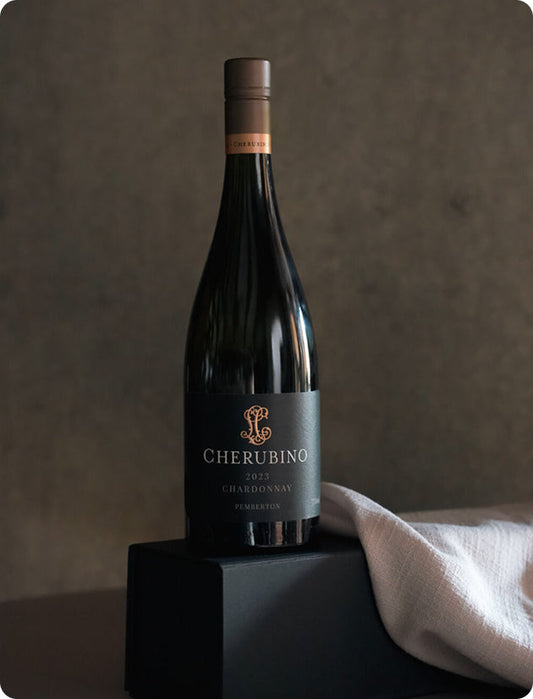
To suggest that Larry Cherubino makes a prodigious amount of wine would be both correct and a gentle understatement. However, he and his winemaking team (not to be overlooked or underestimated) are responsible for a huge number of very high quality wines, as are evidenced in this report. The Chardonnays are routinely made in a full-bodied, plush style, which is created by winemaking rather than later picking dates. The wines are enveloping, rich, balanced and opulent, in many cases, yet always classy. The Cabernets are often supported by a profusion of very high quality French oak. They offer cellaring propositions of the highest order, emphasized by Larry's access to very high quality fruit and very high attention to detail in his vineyards. The wines included in this report are his Margaret River wines, but he also makes a collection of wines from the Great Southern. The "plus" signs in the scores here indicate that the wines will be better with time.
2022 CHERUBINO MARGARET RIVER CHARDONNAY
The fruit for this wine was sourced from both Karridale (in the south) and Wilyabrup (north of Margaret River town) and was handpicked, whole-bunch pressed and fermented in French oak (both new and seasoned) prior to six months' maturation. In the mouth, the 2022 Margaret River Chardonnay is laden with piercing acidic intensity (no doubt from the Karridale component), while the fruit that swarms around it is powerful, creamy and juicy. An opulent wine without overt profligacy, this is hitting a sweet spot of balance. This is a very impressive wine, gentle, in its way. It has notes of salted yellow peach, apple skins, dried curry leaves, coastal brine, crushed shells and preserved yuzu. There are notes of white flowers in abundance along with crushed nuts/almond meal/toasted pistachio. This is astoundingly good, but it will get better.
96 points
2021 CHERUBINO MARGARET RIVER CHARDONNAY
The 2021 Margaret River Chardonnay is aromatically opulent and rich, layered with toasty oak, stewed apples and a flick of custard powder. In the mouth, this is full, abundant, lush and long, with loads of custard apple, nashi pear, sandalwood and pastry. It is flamboyant, in its way. It is satisfying, verging on old school, but with clarity and flair. It is airy and warming, like a feather quilt in winter.
95+ points
2022 CHERUBINO GINGIN CHARDONNAY
The 2022 Gingin Willows Vineyard Chardonnay is pretty, with custard apple, donut peach, cinnamon, croissant, vanilla pod and almond meal in profusion. It's like a feather pillow—soft, sinking, soft. In the mouth, the acid pulls it firmly back onto the rails and imbues it with a backbone. What a pretty thing this is. It is so plump, but structured and fine. It has a shells and spray sort of character.
94+ points
2022 CHERUBINO MARGARET RIVER GRENACHE ROSE
I really like this wine. Far from being a simple, summer quaffer, the 2022 Willows Vineyard Grenache Rosé is concentrated and gently textural, with layers of undulating flavour that spread across the palate. The time in two and three year old oak has imbued a softness and completion in this wine, resulting in a sapid, supple wine. It has notes of pink peppercorns, raspberry leaf tea, violets, crushed nuts, rosemary, milk chocolate (odd, but present?) and summer mulberries. This is gorgeous, a lovely use of handpicked Grenache fruit. Recommended.
94 points
2022 CHERUBINO CAVES ROAD CHARDONNAY
2022 was in stark contrast to the 2021 season prior to it. Where 2021 had plenty of rain throughout the growing season, it was also cooler than the 2022 season. The wines from 2022 are powerfully driven and fruited, with the whites (particularly the Chardonnays) showing many of the same unbound fruit drive/soft acid qualities found in the 2014 vintage. Here, the 2022 Caves Road Chardonnay is still utterly inchoate and unevolved: cool ferment/banana-lolly esters and green apples dominate the nose. In the mouth, the wine is powerful, fulsome and plush. It is buxom, almost, with notes of yellow-flesh peach. It is forward, due to the warmth of the growing season, and resplendent in oak and richness. The fruit is sourced from Wilyabrup, Karridale and Wallcliffe. This is painfully young for release, with crushed nuts and marzipan through the finish.
93+ points
2020 CHERUBINO MARGARET RIVER CABERNET SAUVIGNON
The 2020 Cabernet Sauvignon is concentrated and shapely, with a skin of dusty, drying tannins that encase the supple, raspberry-laden fruit. There is a muscular display of oak and dried spice here, with notes of nutmeg, clove, star anise, dried bay leaves, nori, cassis and iodine. This has brilliant, exciting fruit. It was matured for 12 months in a combination of new and one year old French oak; the balance feels tipped in the "new" direction. This will age gracefully.
93+ points
2022 CHERUBINO DIJON CHARDONNAY
The 2022 Dijon Wychwood Vineyard Chardonnay is austere, tight and powerful. It's an interesting thing, the combination of the warm vintage in a cool area. It can bring both elements into focus. This is a very good wine. There are notes of savoury peach, lemongrass, sandalwood and malt biscuits. The Dijon clones perform so differently in the mouth than the Gingin clone does—this has a linearity and firmness
92+ points
2022 PEDESTAL ELEVATION CHARDONNAY
The 2022 Elevation Chardonnay is creamy, plush and soft, with layers of custard powder, stewed apple, yellow peach and Portuguese tart. There is also a hint of crème brûlée top. This is a big, pillowy pleasure.
92 points